Blog
Maison & Objet 2026: The Art of Storytelling
by Jean-Yves Léonard, Pacific Compagnie
Paris, 20 January 2026
Some brands display furniture. And then there is Eichholtz, which, at Maison & Objet, transforms each stand into a chapter of a visual novel. After exploring yesterday the subtle balances between past and future, I find myself immersed in the universe of a Dutch house where luxury is not a question of price, but of storytelling. Here, every piece has a soul, every material a memory, and every staging an intention: to make you forget that you are in a professional showroom.
Eichholtz, or the art of staging
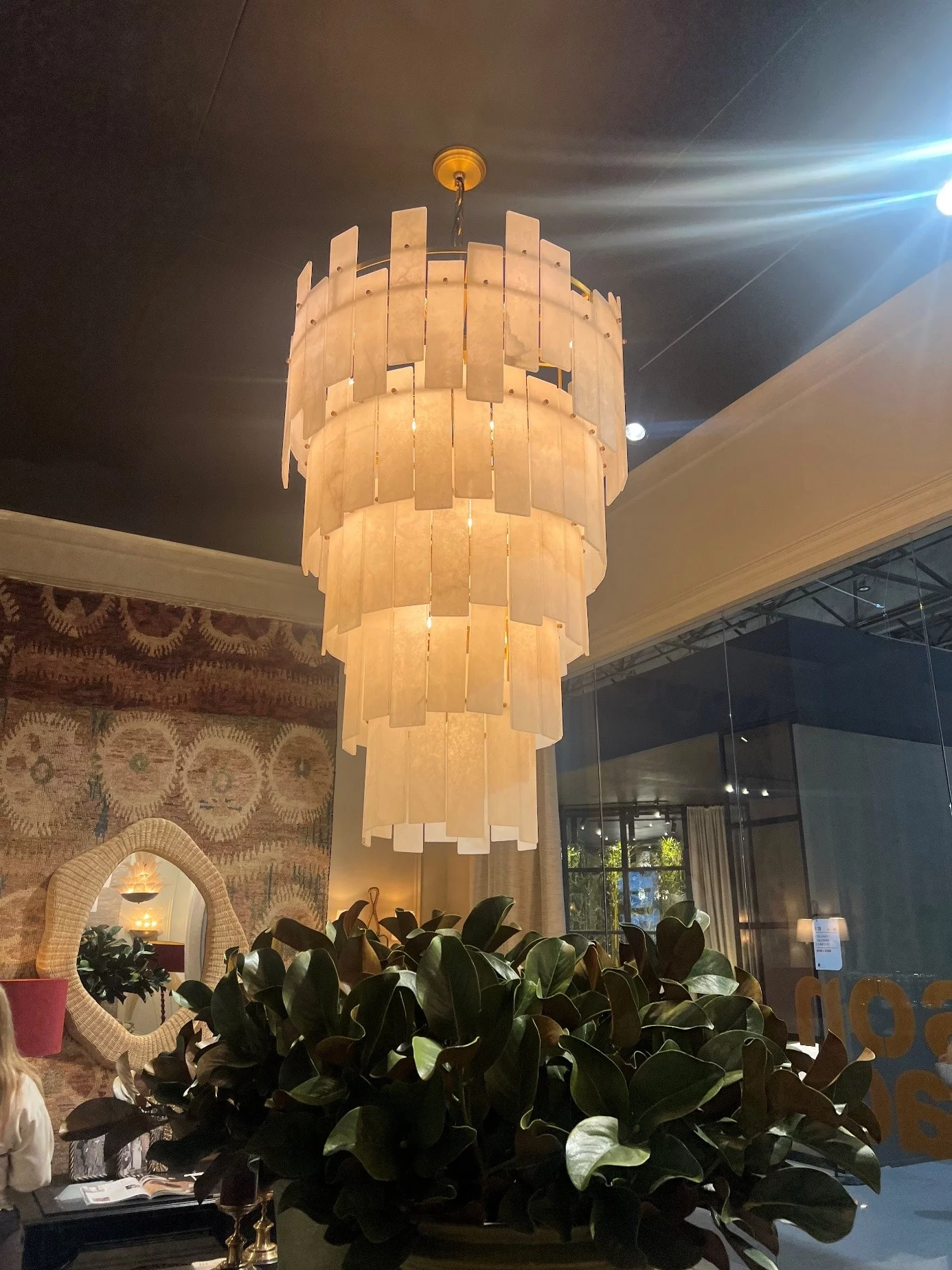
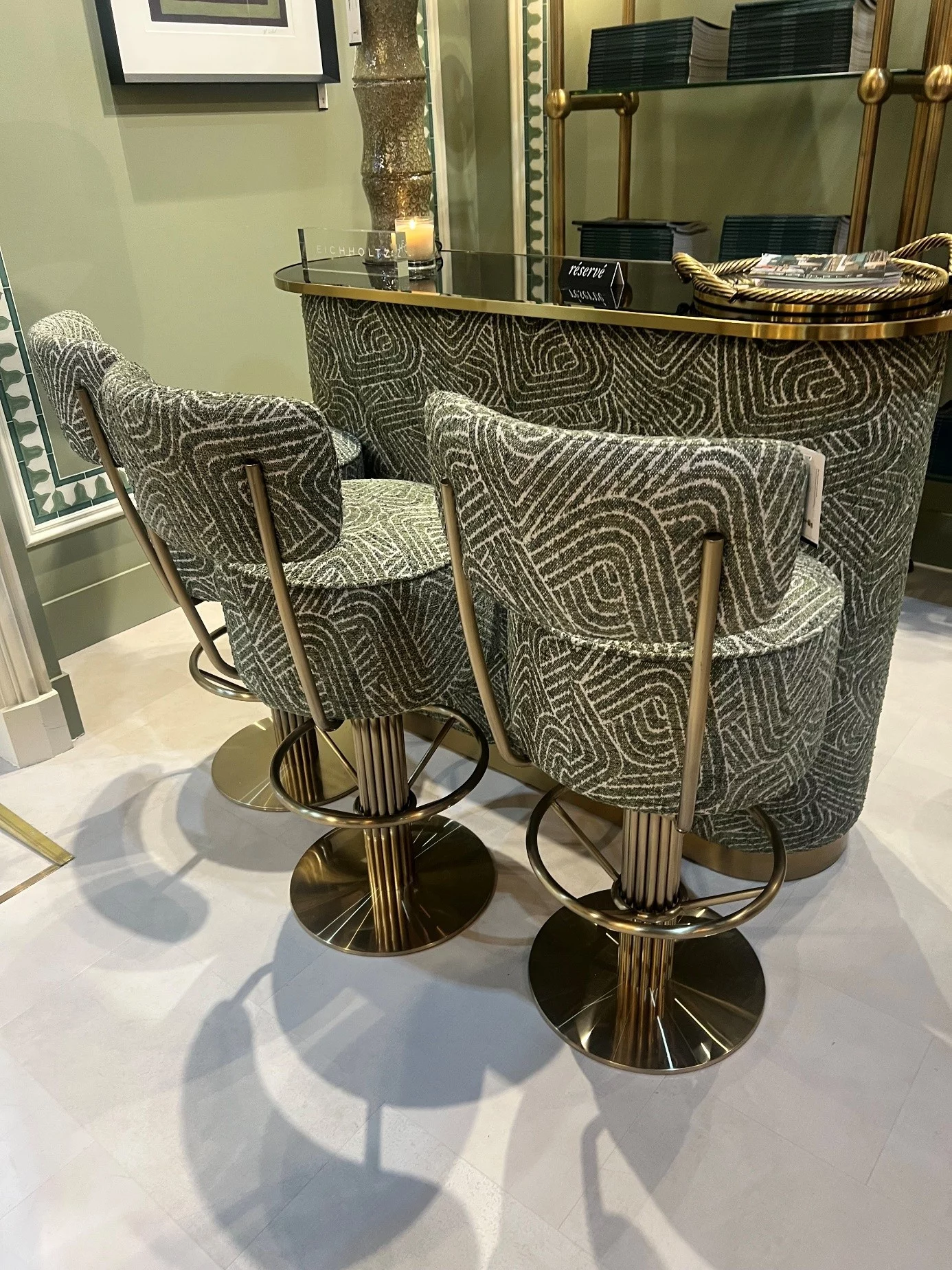
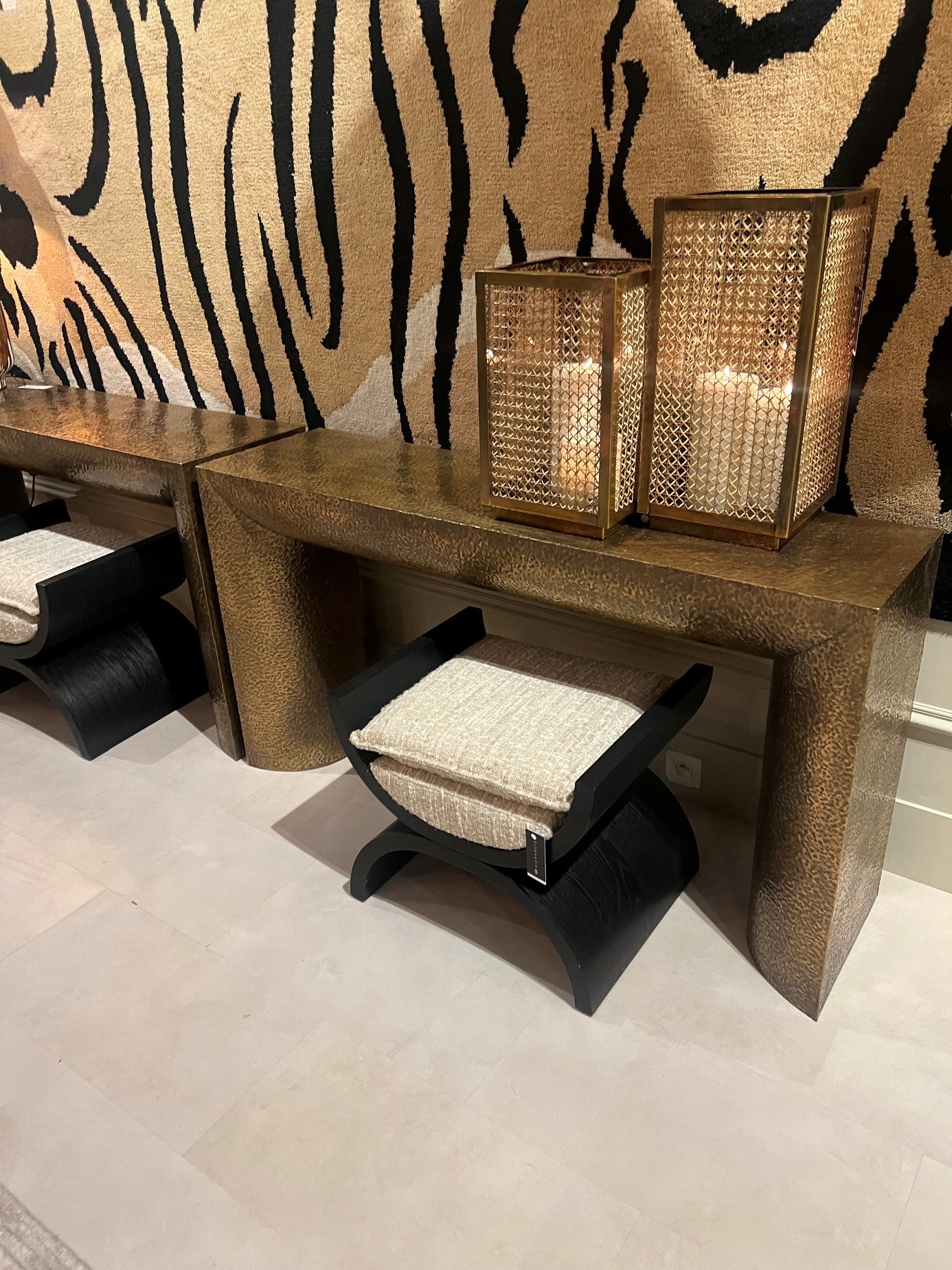
Founded over thirty years ago by Theo Eichholtz, the brand has built its reputation on a simple principle: design must tell a story. And what a story! Between the *Greyson XL Chandelier*, a cascade of suspended alabaster plates like a kinetic sculpture, and the *Carleton Bar Stool with Back*, where sculptural brass meets fabric with graphic patterns, we oscillate between Art Deco and unashamed modernity. "We don't create objects, we compose décors", one of their designers confessed to me as I lingered before a hammered metal console, reflecting the light of brass lanterns. A play of mirrors and materials that reminds us that true luxury lies in the details — those that transform a space into an experience.
Theatrical atmospheres
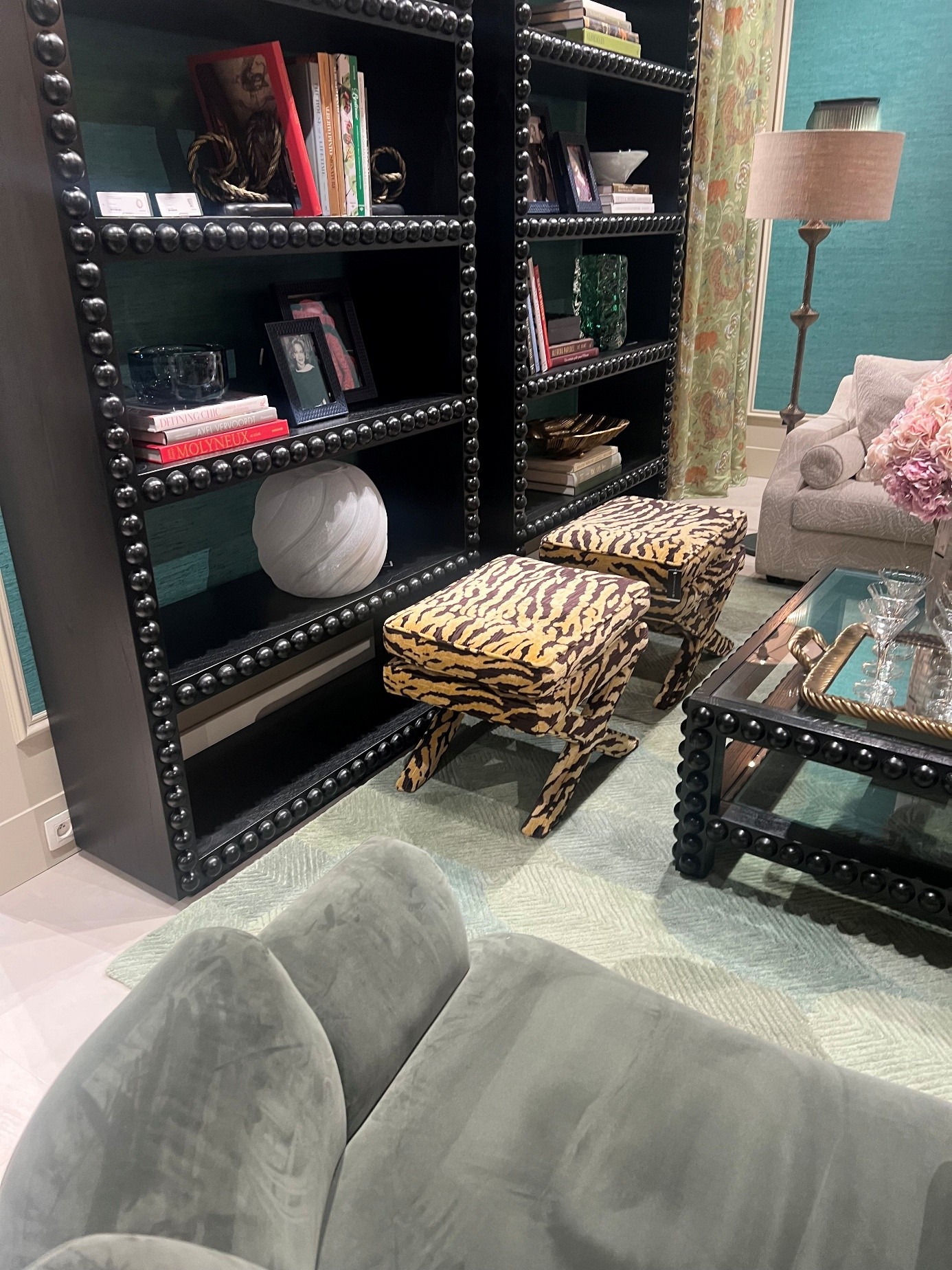
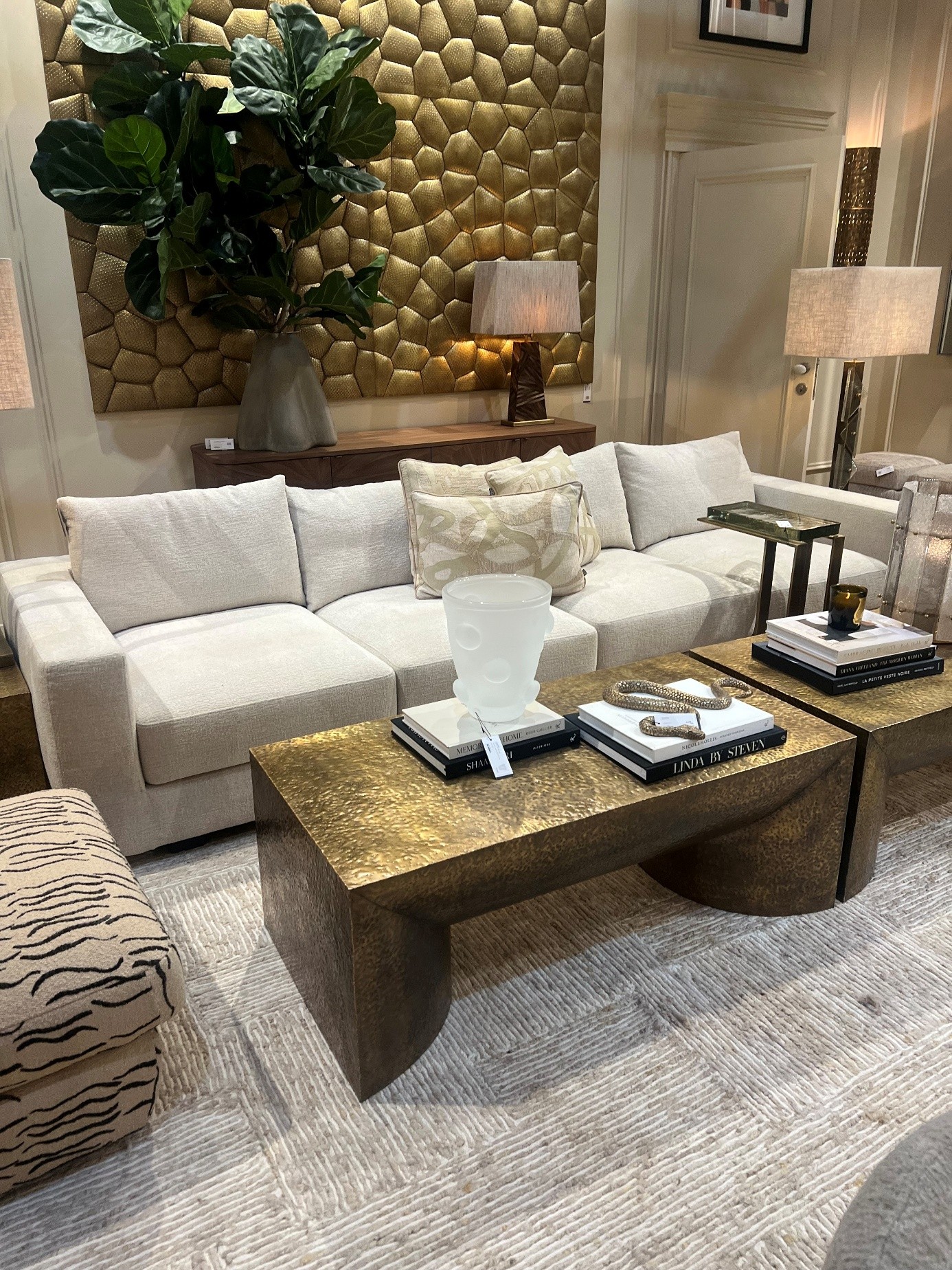
At Eichholtz, they don't talk about furniture, but about *scenography*. A black bookcase, adorned with decorative nails, converses with an animal-print rug, while a light sofa, placed before a textured wall with golden reflections, invites contemplation. "The secret?", whispers an interior architect I crossed in the aisle, "it's knowing how to balance boldness and elegance." Here, a zebra-striped rug energises a living corner; there, a hammered metal coffee table echoes the codes of a console, creating a visual harmony that seems to go without saying. Yet nothing is left to chance. Every object, every texture, every light is designed to evoke an emotion, sparked by the encounter between the raw and the refined.
Luxury as self-evident
What strikes you is this ability to make sophistication accessible, without ever falling into easiness. Noble materials — brass, alabaster, rich fabrics — are worked with jewel-like precision, but always in the service of an atmosphere. "Luxury today is about feeling at home, even in a palace", summarises a New York decorator, visibly seduced by an armchair with clean lines, placed before a bookcase where books and objects seem to have been chosen for their ability to inspire. Eichholtz doesn't sell furniture: the brand sells interiors where you want to live, dream, and escape.
Heritage as a common thread
In a show where many ride the wave of "revised vintage", Eichholtz reminds us that timeless elegance cannot be decreed, it must be cultivated. Their creations, at the crossroads of eras, prove that the past is not a trend, but an inexhaustible source of inspiration. "We don't follow trends, we anticipate them", a manager explains to me, before a staging where a textured wall with golden reflections answers seating with geometric patterns. A philosophy that resonates particularly in this edition of Maison & Objet, where the aim is less to surprise than to move.
And tomorrow?
As I leave the stand, a question comes to mind: in a world where everything moves ever faster, where trends fade before they have even emerged, brands like Eichholtz remind us of an all-too-often forgotten truth. Design, real design, the kind that lasts, is a matter of patience, know-how, and above all, passion. "An interior is like a good story", a visitor whispers to me as she lingers before an alabaster lamp. "The better it is told, the more you want to stay."
Next stop: Milan, where we will see if this quest for authenticity and meaning withstands the test of time. In the meantime, one thing is certain: at Maison & Objet, Eichholtz has delivered. And we, at Pacific Compagnie, want more.
Related posts
 Pourquoi opter pour des meubles design dans l'aménagement intérieur et extérieur
10 idées déco de luxe pour votre extérieur
3 conseils pour une décoration d'intérieur de luxe
Complete Guide to High-End Furniture Maintenance: Wood, Leather, Marble, and Metal
How to Recognize an Authentic Luxury Furniture Piece?
Pourquoi opter pour des meubles design dans l'aménagement intérieur et extérieur
10 idées déco de luxe pour votre extérieur
3 conseils pour une décoration d'intérieur de luxe
Complete Guide to High-End Furniture Maintenance: Wood, Leather, Marble, and Metal
How to Recognize an Authentic Luxury Furniture Piece?